
7 Reasons Bike Lanes and Sidewalks Are Good for Drivers

As Congress contemplates a more “traditional” transportation infrastructure bill focused on highways, and as the U.S. Department of Transportation pulls back grants for projects perceived as unfriendly to drivers, the divisions between people who drive cars and people who ride bikes can feel stark. But this is a false dichotomy. Drivers, bicyclists, pedestrians, and transit riders don’t have to compete for funding. In fact, investments in biking and walking typically make driving better.

Even if you never ride a bike, take the bus, or walk around your city or town, your driving experience — and your quality of life — improves when streets are also designed to accommodate other modes of travel. Here’s how:

1. Less traffic.

The path to less congestion is not more road; it’s more options. If people in your community can easily walk, bike, or take transit, that means less car traffic. But if biking and walking conditions are dangerous and transit service is lousy, that means more people drive cars and are stuck in traffic alongside you. Expanding roadways may seem like a solution, but research shows that this fails to relieve congestion in the long term. Wider roads attracts more cars, and more people end up getting stuck at the same (increasingly large) intersections.

2. Shorter travel times.

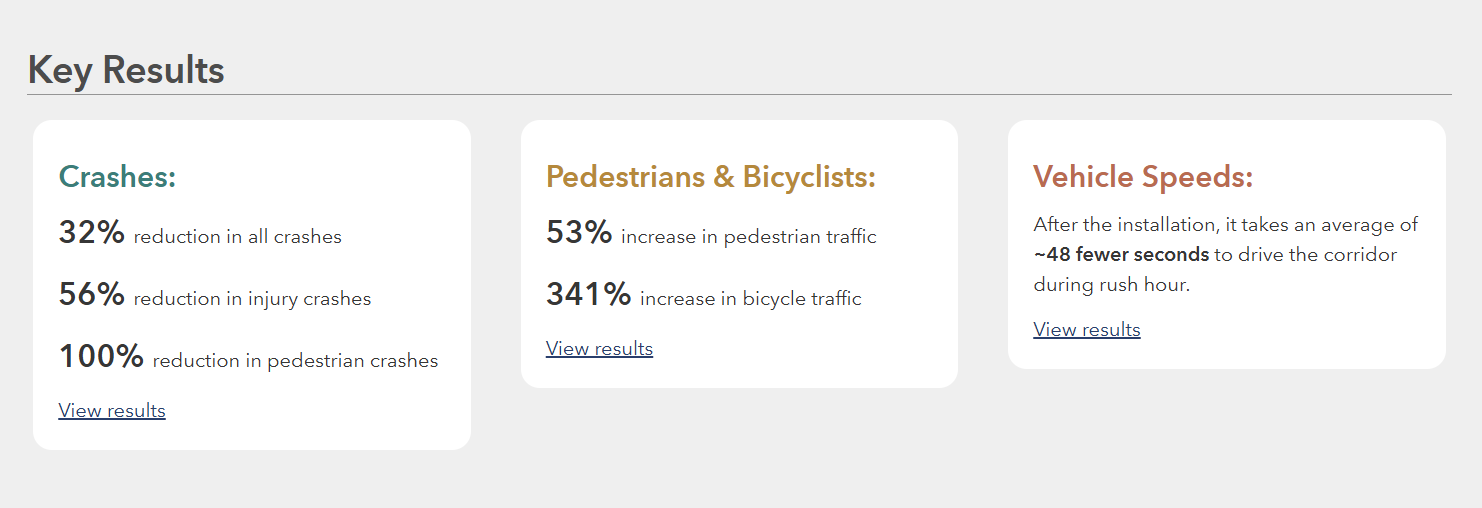
It may seem counterintuitive, but reallocating road space to other modes can actually make car travel more efficient. Take, for example, Pennsylvania Avenue SE in Washington, DC. This busy commuting corridor was recently reconfigured to have two lanes in each direction instead of three, making space for a peak-hour bus lane (used for parking in off-peak hours) and a protected bike lane. The result? Travel times for people in cars during rush hour are now 48 seconds faster, on average, than before. Why? Clear, predictable allocation of space reduces friction, provides a genuine choice of modes, and keeps traffic moving.

3. Fewer crashes.

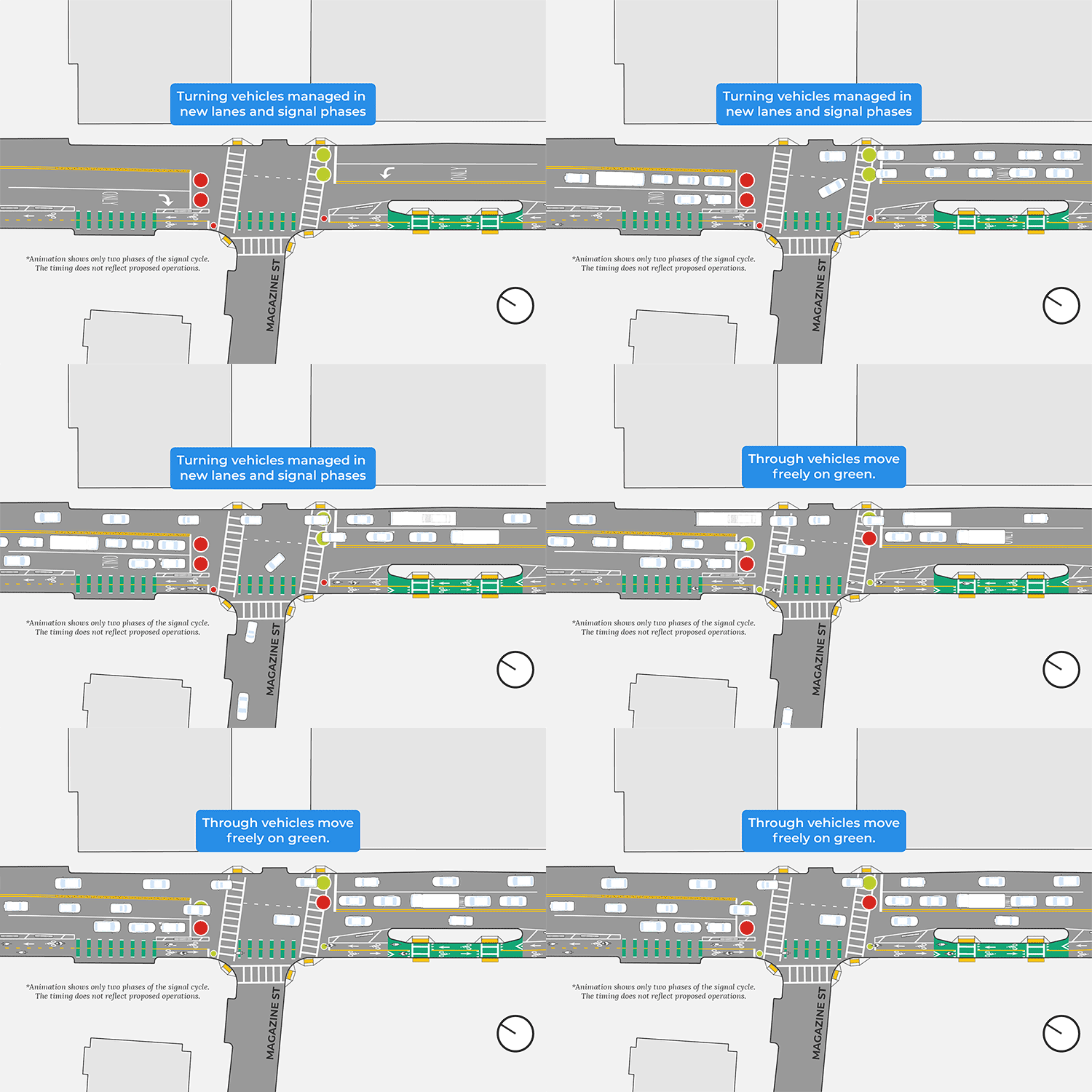
Adding more lanes for cars makes crashes more likely in a number of ways. For example, left-turning drivers have more lanes to cross, exposing them to dangerous left-hook crashes. And drivers weave between lanes as they jockey for position and try to get ahead. Wider roads also lend themselves to higher speeds, making the crashes that do happen more lethal — for people in cars, as well as those on foot and riding bicycles. By contrast, adding sidewalks and bike lanes makes roadways safer for drivers, too, by making intersections easier to navigate and creating fewer conflict points.

A graphic of the key results from DDOT's Pennsylvania Avenue reconfiguration, where the allocation of space is safer for drivers, bicyclists,, pedestrians and transit users, alike.
Key results from DDOT's Pennsylvania Avenue reconfiguration (courtesy of DDOT).

4. Fewer bicyclists in your way.

Drivers regularly report they dislike having to maneuver around people on bikes. The feeling is mutual: People on bikes want to be out of your way, too. A connected network of separated bike infrastructure keeps bikes out of your lane and makes the trip less stressful for everyone.

5. More options for your family.

Large portions of the population cannot drive — including children, people with disabilities, and aging adults. When communities invest in safe walking, biking, and transit, family members who can’t drive or don’t have access to a car gain independence. That can mean fewer chauffeuring trips, more independence, and less pressure on parents and caregivers.

6. Stronger local economy.

Bike lanes are good for business. Numerous studies show that safe, comfortable places to walk and bike increase retail sales, attract visitors, and support higher property values. A healthier local economy benefits drivers, through stronger tax bases and more money to maintain streets and bridges.

7. Return on investment.

Georgia Governor Brian Kemp recently announced a plan to spend $1.8 billion to widen a stretch of I-75 in Atlanta. That’s a hefty price tag for years of construction delays followed by, at best, a few months of congestion relief. In fact, it’s more than the Federal government spent on pedestrian and bicycle projects in all of 2024. Instead of an endless cycle of congestion and expansion — and the escalating costs that go along with it — investing across multiple transportation modes is a more cost-effective way to improve everyone’s experience on the streets we already have.

Separating motor vehicles, bicyclists, and pedestrians in time and space improves safety for everyone

The real choice isn’t between drivers and non-drivers. It’s between repeating the same costly congestion band-aids or investing in solutions that actually work. A highway-only approach guarantees more expensive projects that limit the benefits our transportation system can deliver. A bill that includes — or even increases — funding for biking, walking, and transit improves the transportation experience for everyone, including drivers.

See All Articles