MnDOT Facility Design Guide
Minnesota
Project Summary
The Minnesota Department of Transportation (MnDOT) has been advancing a multimodal transportation system that supports the health of Minnesota’s people, environment, and economy. This commitment builds on Minnesota GO, the agency’s 50-year transportation vision launched in 2011, which outlines a future where the state’s transportation system better reflects what Minnesotans expect and need.
To reinforce this long-term vision, MnDOT set out in 2019 to replace its Road Design Manual with a new Facility Design Guide (FDG). The FDG introduces an entirely new approach to roadway design that emphasizes multimodal accommodations and performance-based practical design. It now serves as the central reference for MnDOT designers to plan, scope, design, and implement projects within MnDOT rights of way.
Toole Design partnered with MnDOT to bring the FDG to life. Our role centered on translating complex design concepts into clear and compelling visual communication. Working across every chapter of the Guide, we created more than 300 exhibits that make the guidance intuitive and actionable for practitioners. These chapters address:
- Chapters 1–3: Principles and objectives, project process, and design controls, which establish the foundation for multimodal, performance-based design
- Chapters 4–5: Configurations, cross sections, alignment, and superelevation for highway segment design
- Chapters 6–7: Intersections, grade separations, and interchanges
- Chapter 8: Non-motorized facilities, including detailed ADA and pedestrian design guidance
- Chapters 9–15: Site design, roadside safety and barriers, pavements, environmental and visual quality, drainage and erosion control, bridges and structures, and other specialty topics
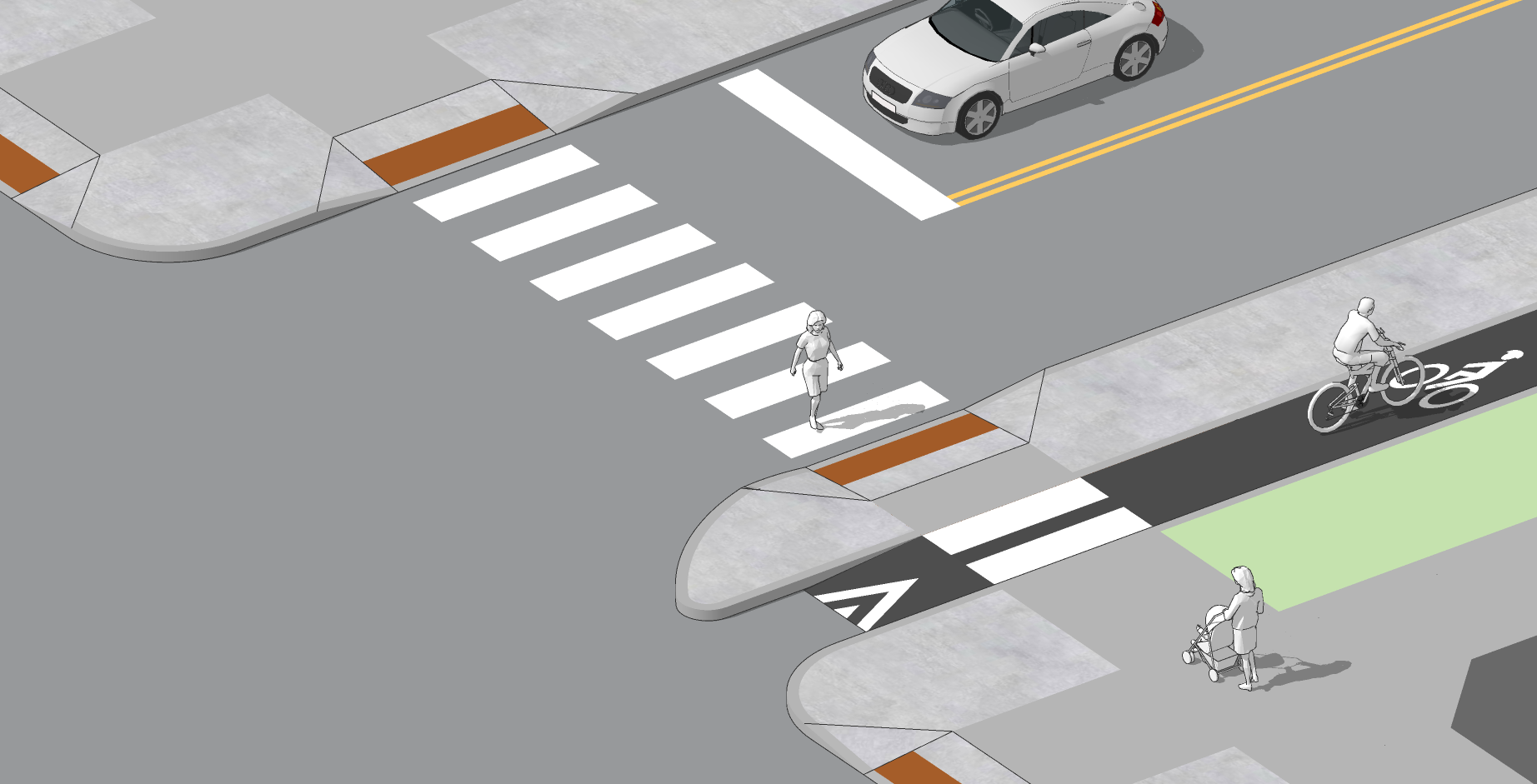
We began by updating MnDOT’s existing CAD-based graphics with a modern style that relied on real-world color palettes and added depth to previously black-and-white drawings. Using perspective viewpoints also allowed us to convey three-dimensional concepts more effectively, particularly for pedestrian, bicycle, and transit elements that benefit from added spatial context. To support long-term use, we developed CAD templates and resources that will streamline future updates to the FDG by MnDOT staff.
Managing a graphics effort of this scale required careful coordination. We collaborated with MnDOT through a shared tracking spreadsheet that monitored progress, quality control, and upcoming priorities. Regular coordination calls ensured that graphics production stayed on schedule and met the highest standards.
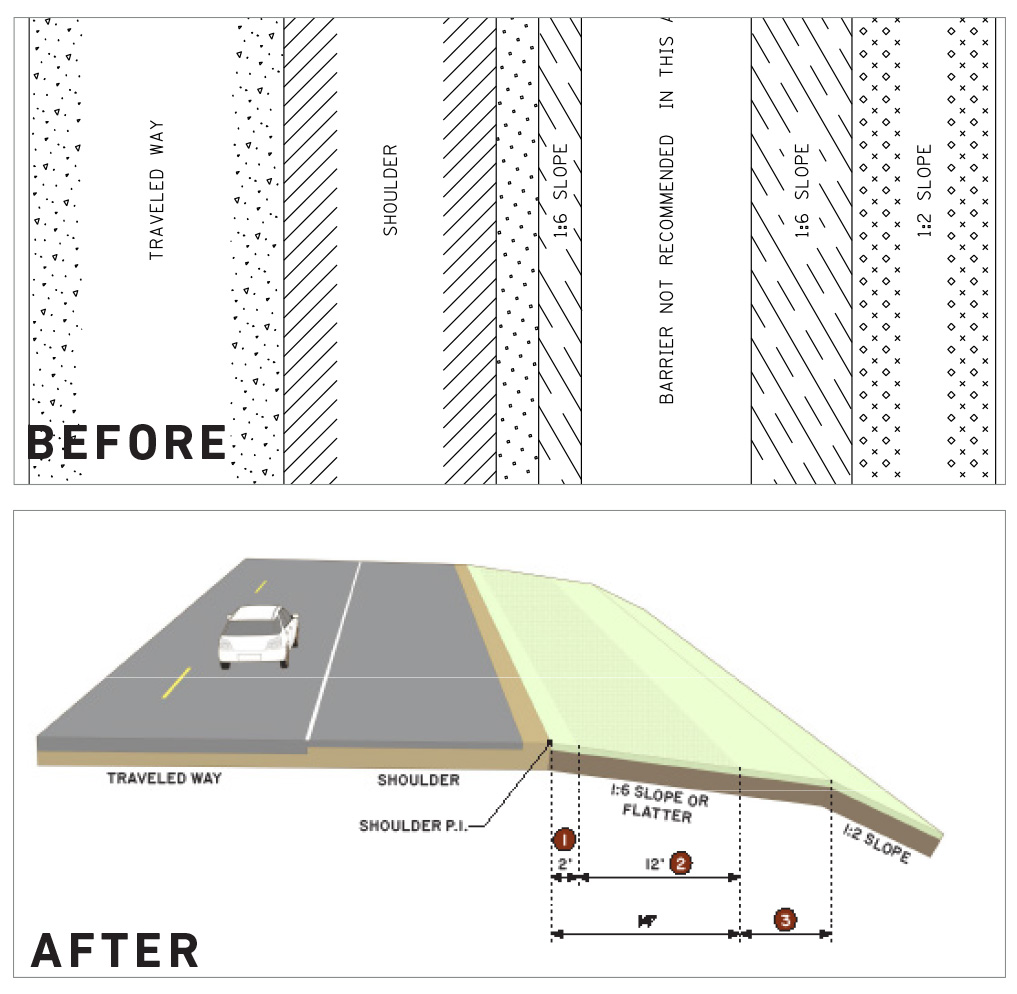
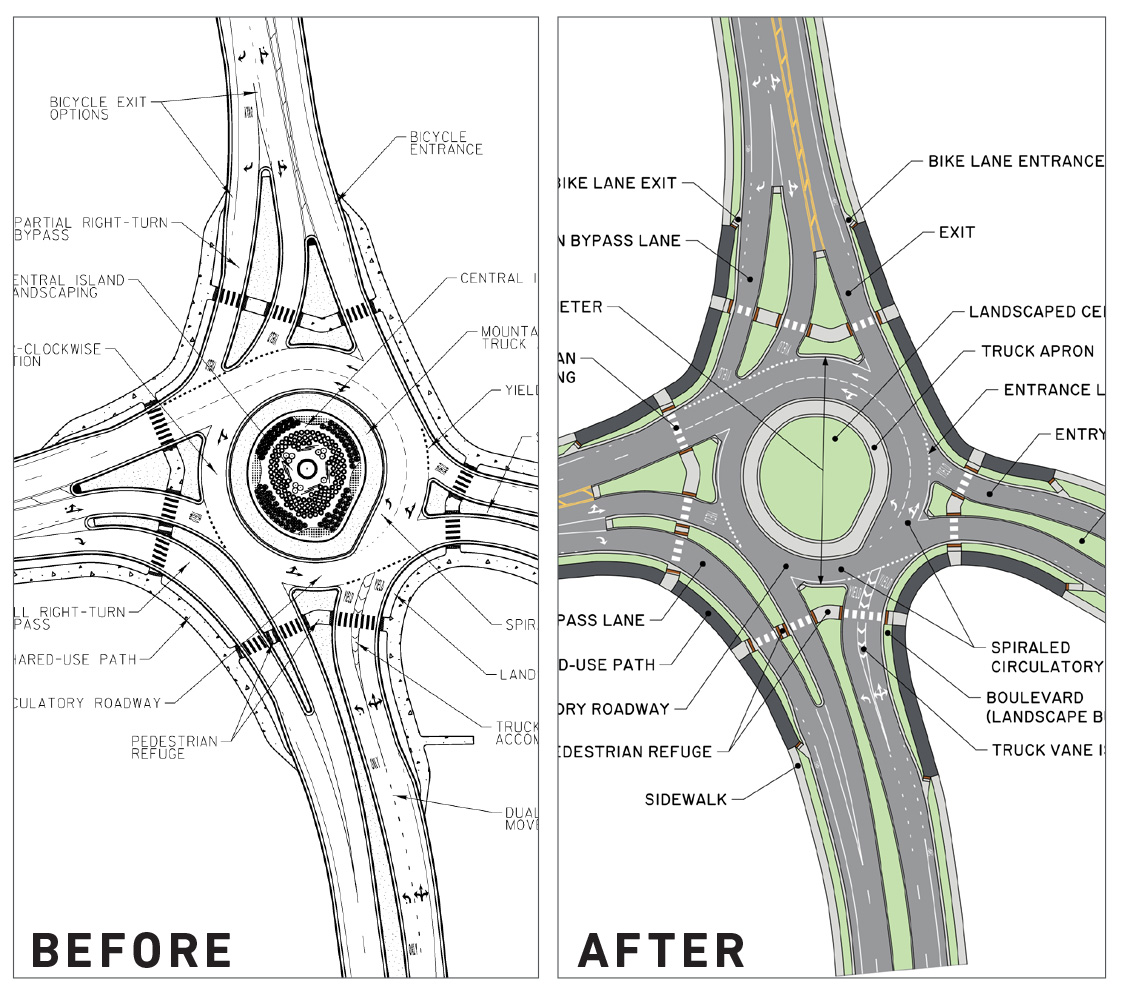
The final package was published following approval and concurrence by FHWA in December 2024. The result is a resource that equips practitioners with clear, effective visual tools to deliver safer, more accessible, and more multimodal projects across Minnesota.