Montgomery County Complete Streets Design Guide
Montgomery County, MD
Project Summary
A Complete Street provides a safe and accessible experience for all road users, whether they are walking, bicycling, driving, riding transit, or delivering goods. To help Montgomery County, MD advance this vision, Toole Design served as the lead author of the County’s Complete Streets Design Guide. We also developed two companion resources, including the Curbless & Shared Streets Design Guide and Accessible Design Guide.
Developing this guidance required close coordination across County agencies and state partners. Our team worked with staff from the Planning, Engineering, Public Works, and Transit divisions through a series of interagency workshops focused on key design issues. We also collaborated with the Maryland State Highway Administration to ensure alignment with state guidance. These conversations helped build consensus around guidance that supports existing County standards and incorporates leading national research on safe, multimodal street design. The guides also help advance the County’s Vision Zero goals. Keep reading to learn more.
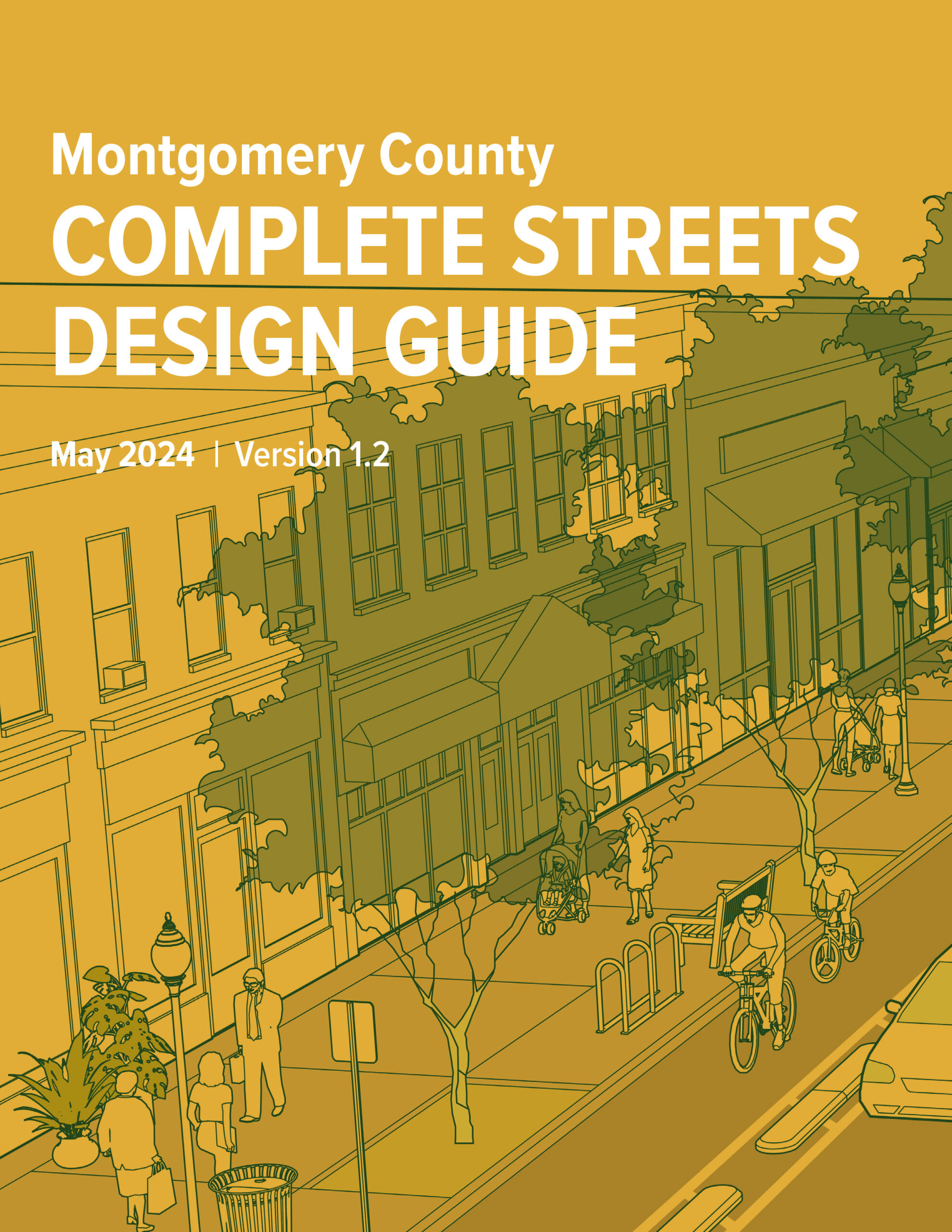
Complete Streets Design Guide
The Complete Streets Design Guide serves as a one-stop resource for designing new streets and reconstructing or retrofitting existing ones based on the surrounding land use context and varied “roles” that each street plays. This is a big change from conventional roadway design, which is rooted more narrowly on functional classification. The guide covers more than 60 design and engineering topics, including intersection design, bicycle facility selection, curbside management, green streets, and maintenance practices. It addresses various land-use contexts, from downtown settings to rural areas and even highways.
Through easy-to-understand 3D graphics, real-world examples, and a video series explaining street types and classifications, engineers and practitioners can easily envision and implement the guidelines.
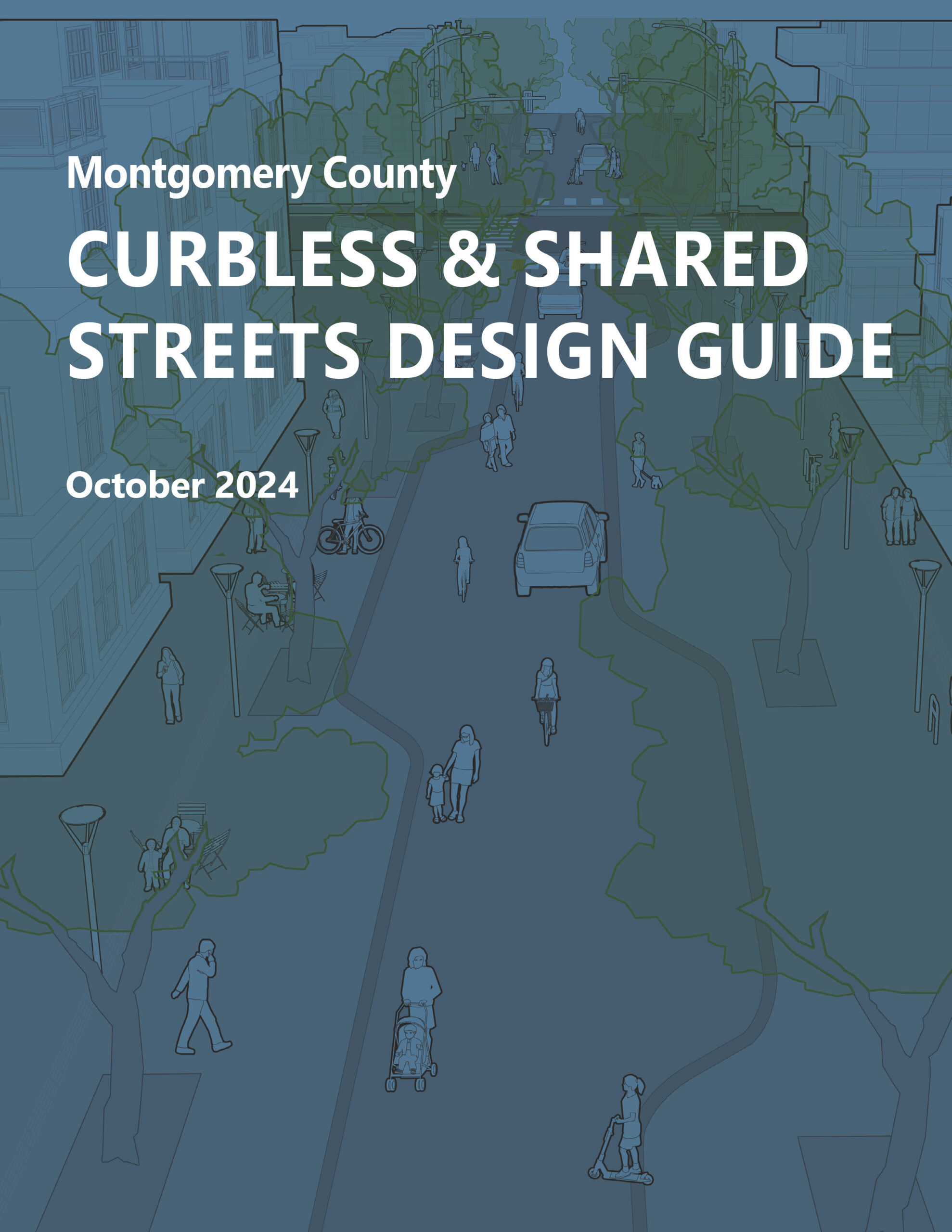
Curbless & Shared Streets Design Guide
As a supplement, the Curbless & Shared Streets Design Guide provides focused policy and design guidance for streets without traditional curbs. It outlines strategies to ensure accessibility for people with disabilities, maintain access for emergency and maintenance vehicles, and integrate effective stormwater management solutions. This guide also ties with a first-of-its-kind Accessible Design Guide, as part of Montgomery County’s efforts to improve accessibility on its streets, sidewalks, crosswalks, and other public spaces.
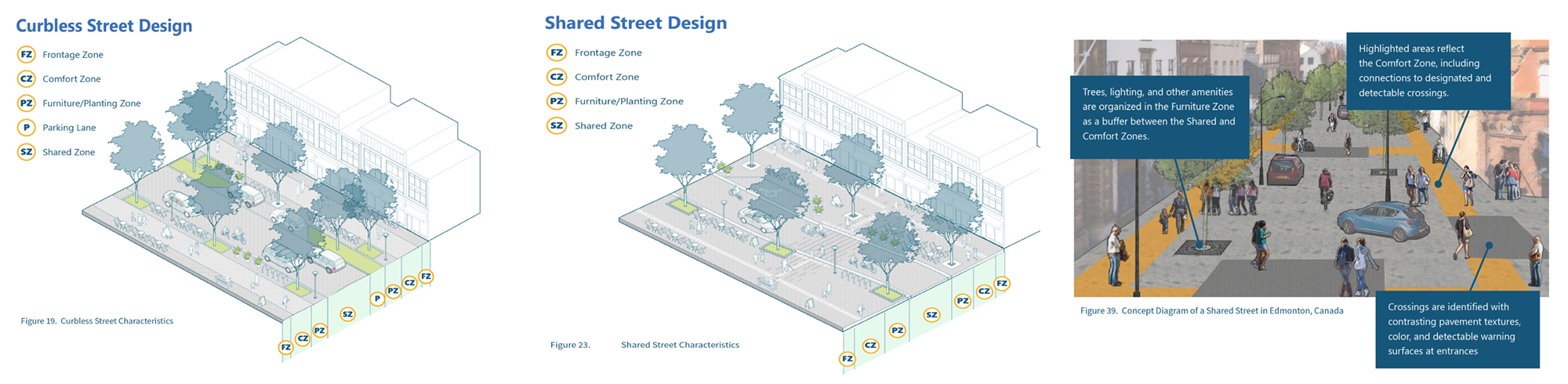
Together, these guides offer a holistic approach to Complete Street design. They provide Montgomery County with practical, implementable tools for creating safer, more accessible, and more sustainable streets that support vibrant, people-focused places. Explore each design guide by clicking on the covers below or check out the explanatory video series.