Rhode Island Safety Action Plan
Rhode Island
Project Summary
The smallest state is ready to make a big impact on safety with the Rhode Island Safe Streets for All Plan, led by the Rhode Island Public Transit Authority (RIPTA). Toole Design served on a team of consultants that provided data analysis, community engagement, and creative services in support of the statewide plan and individualized plans for 31 municipalities — seven of which were led by Toole Design. We were also responsible for all data collection, analysis, and related research throughout the project for all municipalities. By bringing our planning, data science, and visualization experts together for this large and multifaceted project, we were proud to equip communities across Rhode Island with the tools and understanding to put the Safe System Approach into action on their streets.
Expertise Applied
Bringing communities Together for Safety
The planning team led community engagement and developed tailored action plans for each community. We facilitated municipal task forces, engaged with the public at community events, and presented to local governments. We also designed and facilitated a regional Transportation Safety Summit on Aquidneck Island, bringing together leaders from Portsmouth, Middletown, and Newport to build understanding of core Vision Zero principles and discuss strategies for applying the Safe System Approach on their roads. Our robust engagement efforts, paired with our thorough data analysis, resulted in seven customized safety action plans — and a new level of local expertise and understanding throughout Rhode Island.
Data Insights at a Local and Statewide Scale
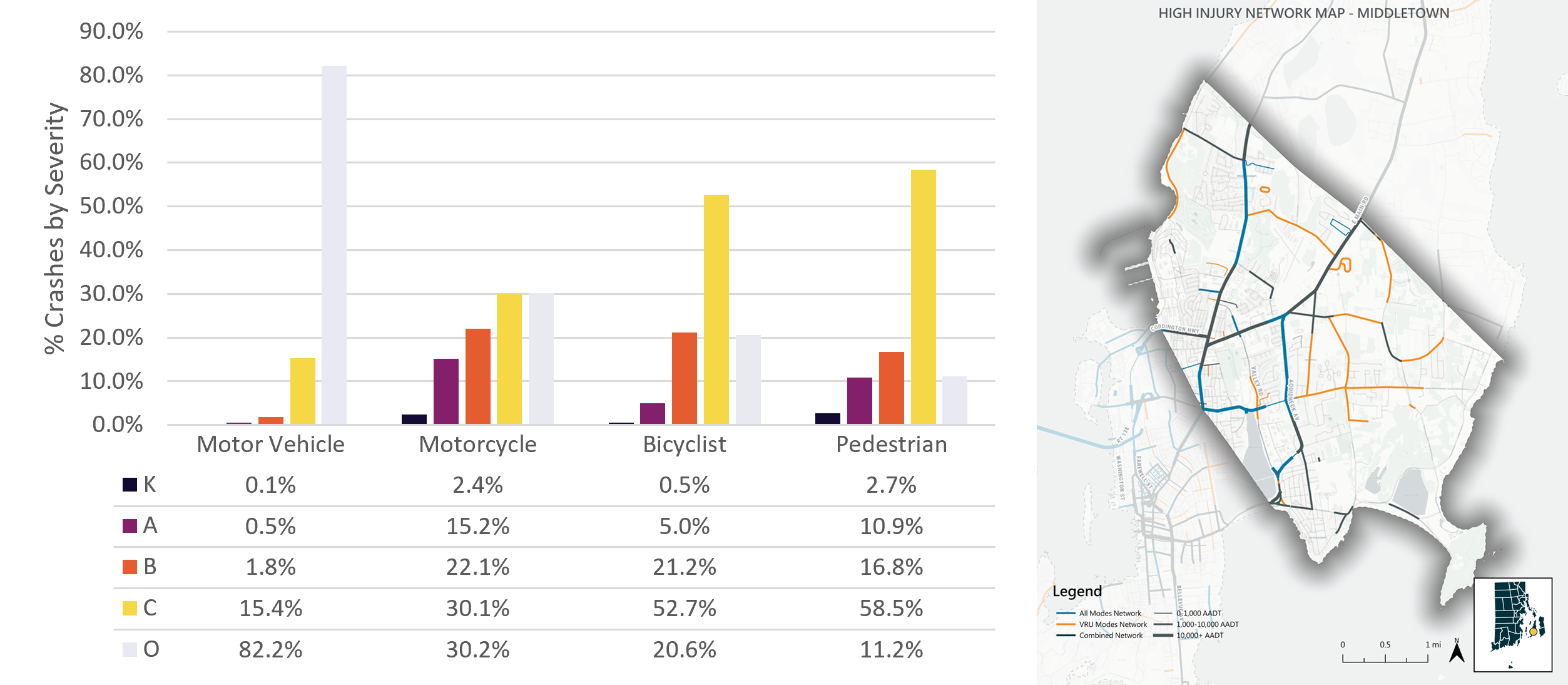
Toole Design’s data science team conducted a comprehensive roadway safety analysis for the statewide plan and for all 31 municipalities. We assessed where the most serious crashes occur, where future crashes are likely to occur, who is most at risk, and how to prioritize projects for maximum safety impact. In our analyses for each community, we kept the following measurement principles front and center:
- Not all crashes are equal. Using the Safe System Approach, we focused on crashes producing fatal and life-altering injuries.
- Different modes require different solutions. Vulnerable road users were analyzed independently from motor vehicles.
- No two communities are the same. Context matters, including demographics, land use, and roadway design.
The team used a variety of open-source tools and data sets to support transparency, accessibility, and equity. We also worked with the Rhode Island Department of Health to study how hospital discharge and EMS datasets can help us to understand safety performance on roads, especially for pedestrians and bicyclists who aren’t always fully reflected in police crash report data.
Vibrant Visuals and Accessible Messaging
While analysis, engagement, and plan development are at the heart of safety planning, those efforts will fall short without thoughtful and accessible messaging for the public. To bring the public on board, Toole Design’s visualization and communications teams created an explainer video to present the Safe Streets for All plan to Rhode Island residents. The video includes vivid graphics, photos and video footage of Rhode Island locations, and 3D animation showing how safety treatments transform an intersection into a more people-friendly place. To make the video accessible to as many Rhode Islanders as possible, we created a Spanish version as well as an audio-described version for blind and low-vision viewers.
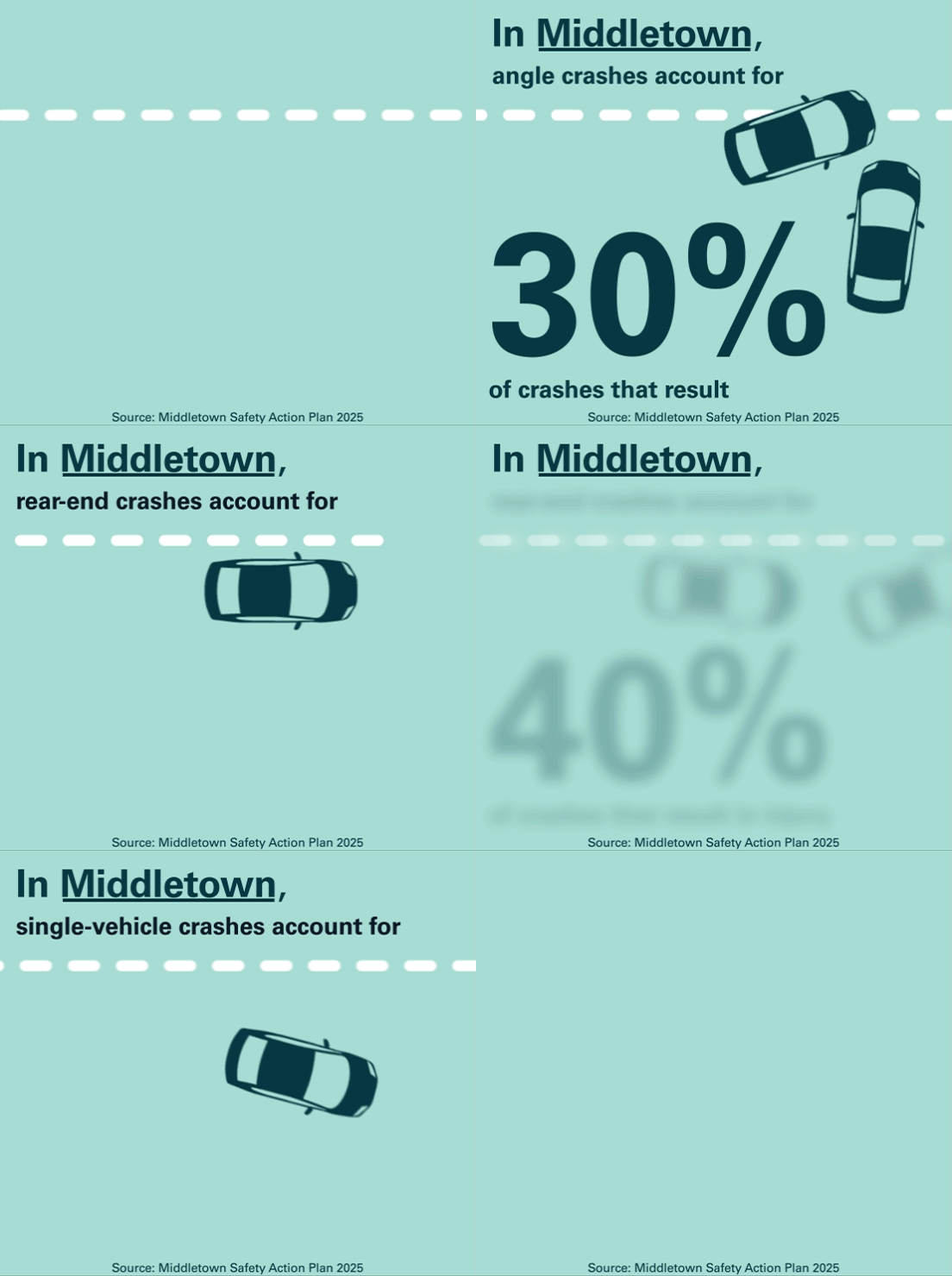
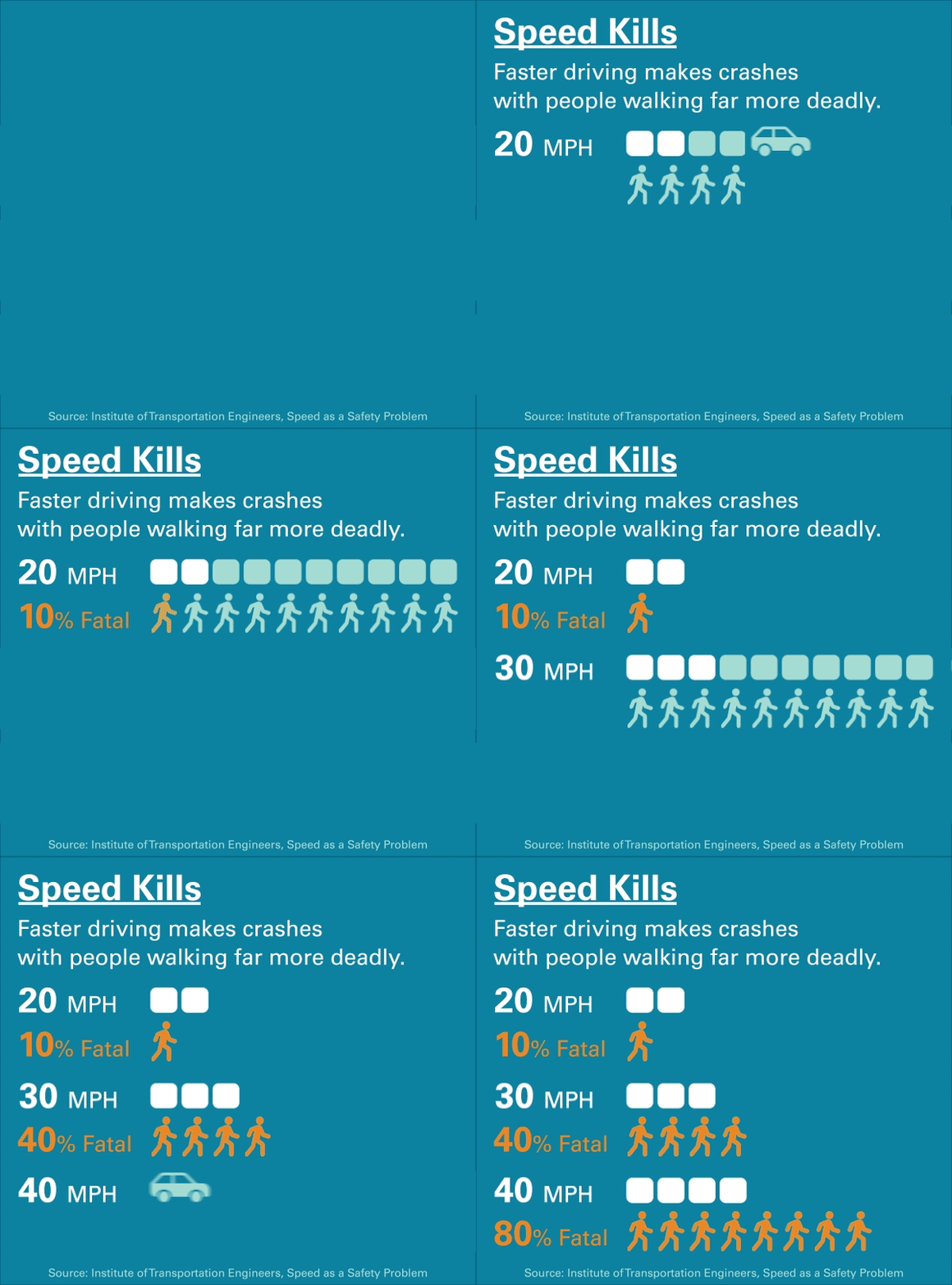
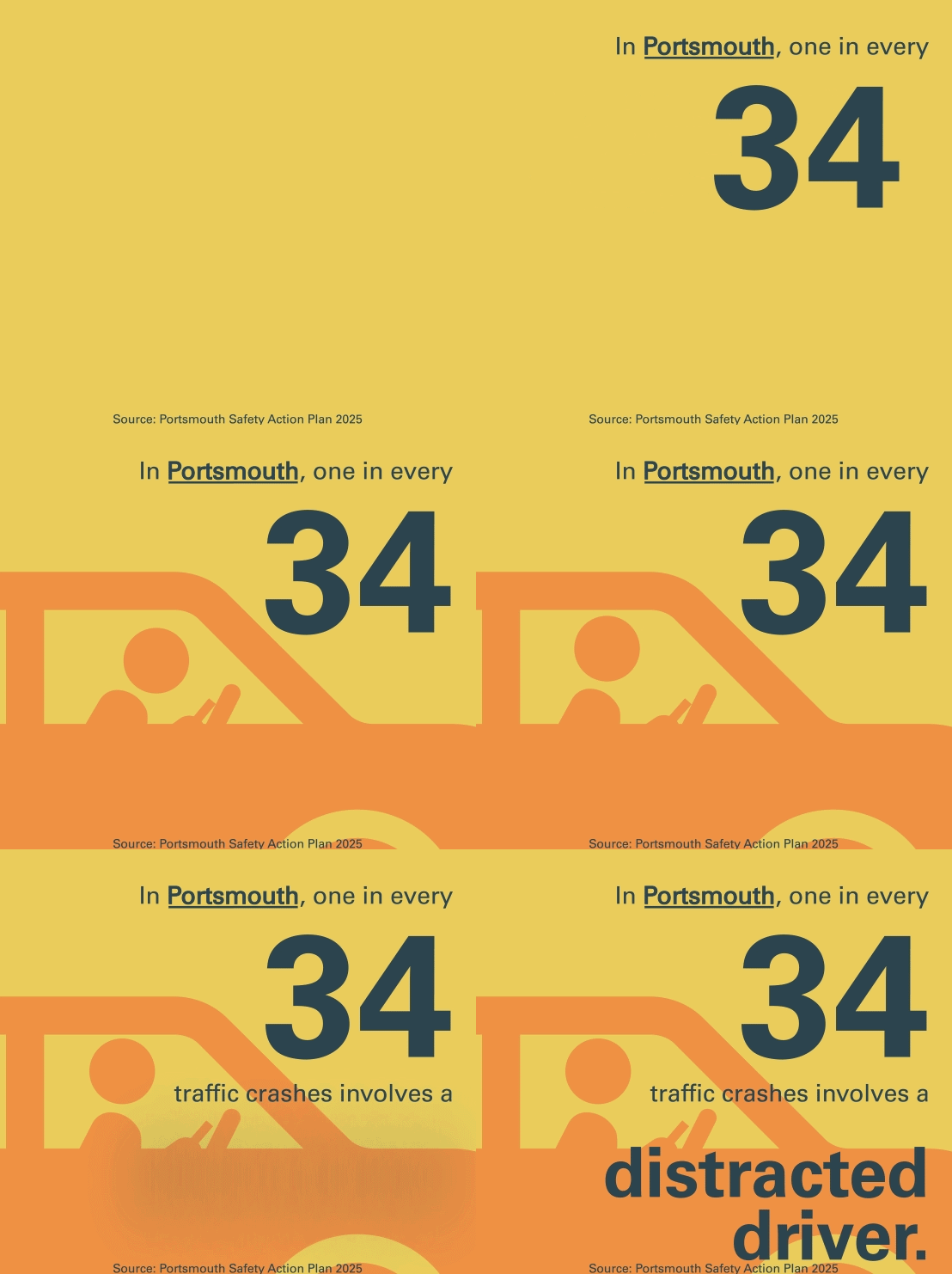
We also created a series of colorful and informative GIFs for social media. Customized by municipality, each GIF pairs a local safety statistic with an animated graphic to help residents understand and support safety improvements in their community.
Momentum for Implementation
Like all safety plans we develop, Rhode Island’s Safe Streets for All plans were created with implementation in mind. For the three Aquidneck Island communities in particular, which share state-owned roads across their borders, we organized their municipal plans to work together as a regional whole. When the plans were complete, we immediately channeled that regional approach into a successful Safe Streets and Roads for All (SS4A) grant application, resulting in $19 million for implementation, demonstration, and supplemental planning on Aquidneck Island. We’re confident the momentum will continue, with the plans, tools, and public support generated by this ambitious project as a solid foundation for a safer Rhode Island.