Toole Design’s New Mobility practice spans a wide range of emerging technologies and challenges, including e-bike and e-scooter regulation, micromobility parking strategies, electrification and charging, curbside management, and so much more. Leading that practice requires the ability to dive deep into research and to reach out to form practical partnerships. Calvin Thigpen brings both, and we’re thrilled to welcome him as our New Mobility Practice Lead. Previously serving as Lime’s first Director of Policy Research, Calvin has worked with hundreds of cities across the globe to solve problems, identify common challenges, and improve regulations. Read on to learn more about Calvin’s background, his e-bike policy recommendations, and what’s next in micromobility.
What first sparked your interest in transportation and technology?
In my 7th-grade English class, I had to write an essay on any topic I wanted, and I chose what I thought was the coolest new technology at the time — the Toyota Prius. Fast forward a few years, and I ended up going to the University of California at Davis, which is a bicycling mecca. I became interested in the intersection of urban planning and sustainability, and I wrote my dissertation on the effect of bicycling experiences on attitudes and perceptions. Later, at Lime, I got to combine my interests in bicycling and technology, working across the globe on issues like safety, equity, and sustainability.
E-Bike safety is a hot topic nationwide. What are your top e-bike policy recommendations for communities?
Number one: Don’t ban e-bikes. Find ways to regulate them thoughtfully so that people have access to this transformational mode of transportation. An e-bike is not the same as an e-moto or e-moped, and they should not be regulated the same way, either. It’s been so encouraging to see people embrace e-bikes over the past few years, like the growing number of parents dropping off on e-bikes at my kids’ school. Putting a stopper on that momentum would be a terrible outcome.
Don’t ban e-bikes. Find ways to regulate them thoughtfully so that people have access to this transformational mode of transportation.
Another recommendation is to find opportunities to cross-collaborate instead of staying siloed. Find common ground between shared micromobility and the broader active transportation community. Bring in the broader planning department, Vision Zero partners, transit agencies — together, you can find common-sense solutions that bring out the best in shared micromobility programs.
What new mobility shifts are on the horizon?
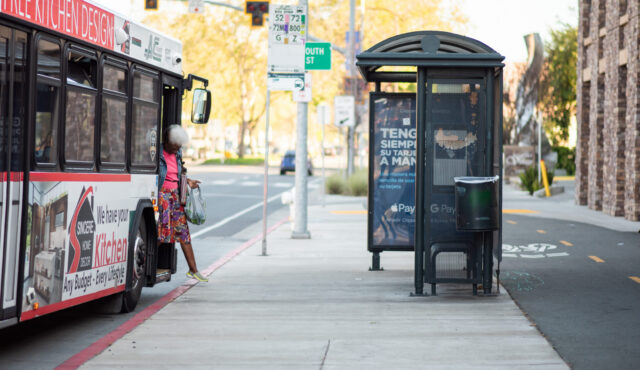
One interesting development is using fare strategies to bring new customers to electrified micromobility, especially as a first- and last-mile connection to public transit. There have recently been exciting pilots in Seattle, Denver, and elsewhere, where riders could get a discount by connecting a transit trip with shared micromobility. If we really want to unlock mode shift potential, that’s a great strategy.
Another area is evolving models of charging in shared micromobility programs. We’re starting to see distributed battery charging using decentralized charging cabinets that can serve both shared and personally owned devices. It’s promising for localizing operations and addressing battery safety concerns.
What’s your favorite way to get around your town?
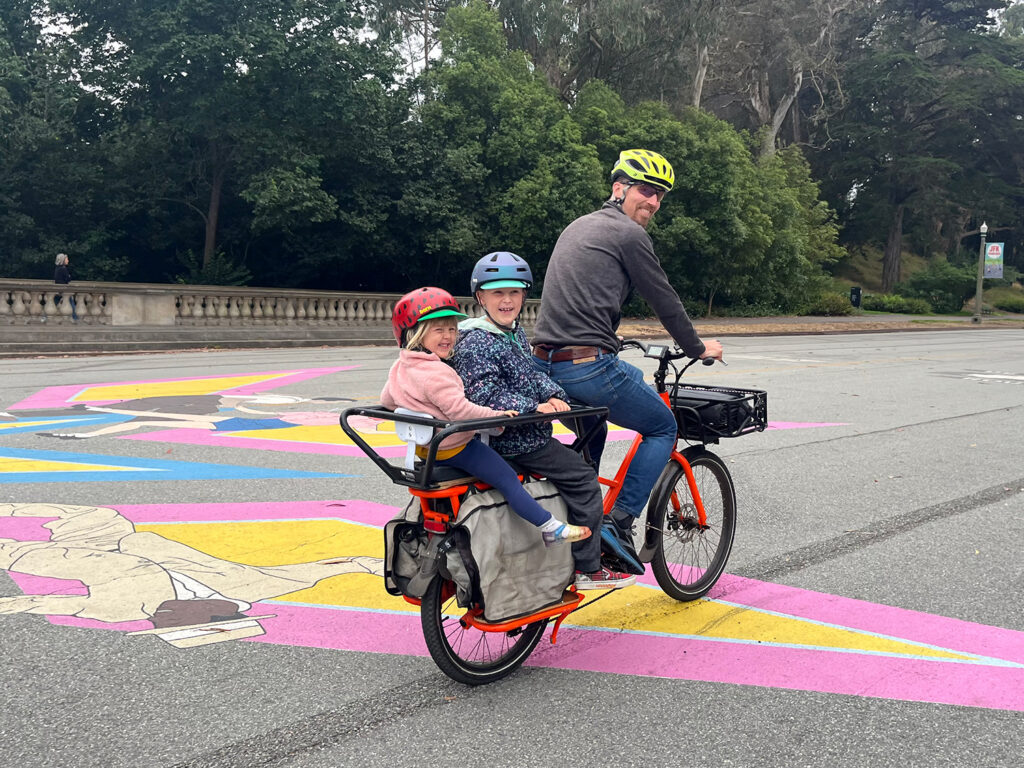
It’s a tie between riding my regular pedal bike and, if my kids are with me, riding our cargo e-bike. That’s how we get to soccer practice — two kids on the back and a big bag of soccer balls on the front. It’s my Swiss Army knife for getting around the city.