
Virginia’s Trail Network Grows More Valuable With Every Mile

This post is co-authored by Trails Practice Lead Jeff Ciabotti, Director of Strategy Andy Clarke, and Project Planner Henry Cohen. Scroll to the bottom to watch a video of their conversation about the growing Virginia trail network.

Virginia has a bold vision: a statewide network of multiuse trails stretching from the Chesapeake Bay to Shenandoah National Park. That vision is now closer to reality than ever. The Virginia Capital Trail, the Fall Line Trail, and the Three Notched Trail each sit at a different stage of development and have faced distinct challenges. But taken together, they tell a single story about how trail projects build on each other to achieve something greater than the sum of their parts.

Toole Design has supported all three and seen the momentum grow as communities experience the compounding benefits of connected trails. From the individual to the community to the Commonwealth, the grand idea of a statewide network is now well on its way to becoming a true story, and we’re proud to play a role in three key chapters.

Virginia Capital trail: Enhancing the individual experience

When the Virginia Capital Trail opened, it did something that no amount of advocacy could fully accomplish on its own: it showed communities what a trail could actually do. People felt healthier, safer, and more connected. Local support for trails, once something that had to be argued for, began to feel like common sense.

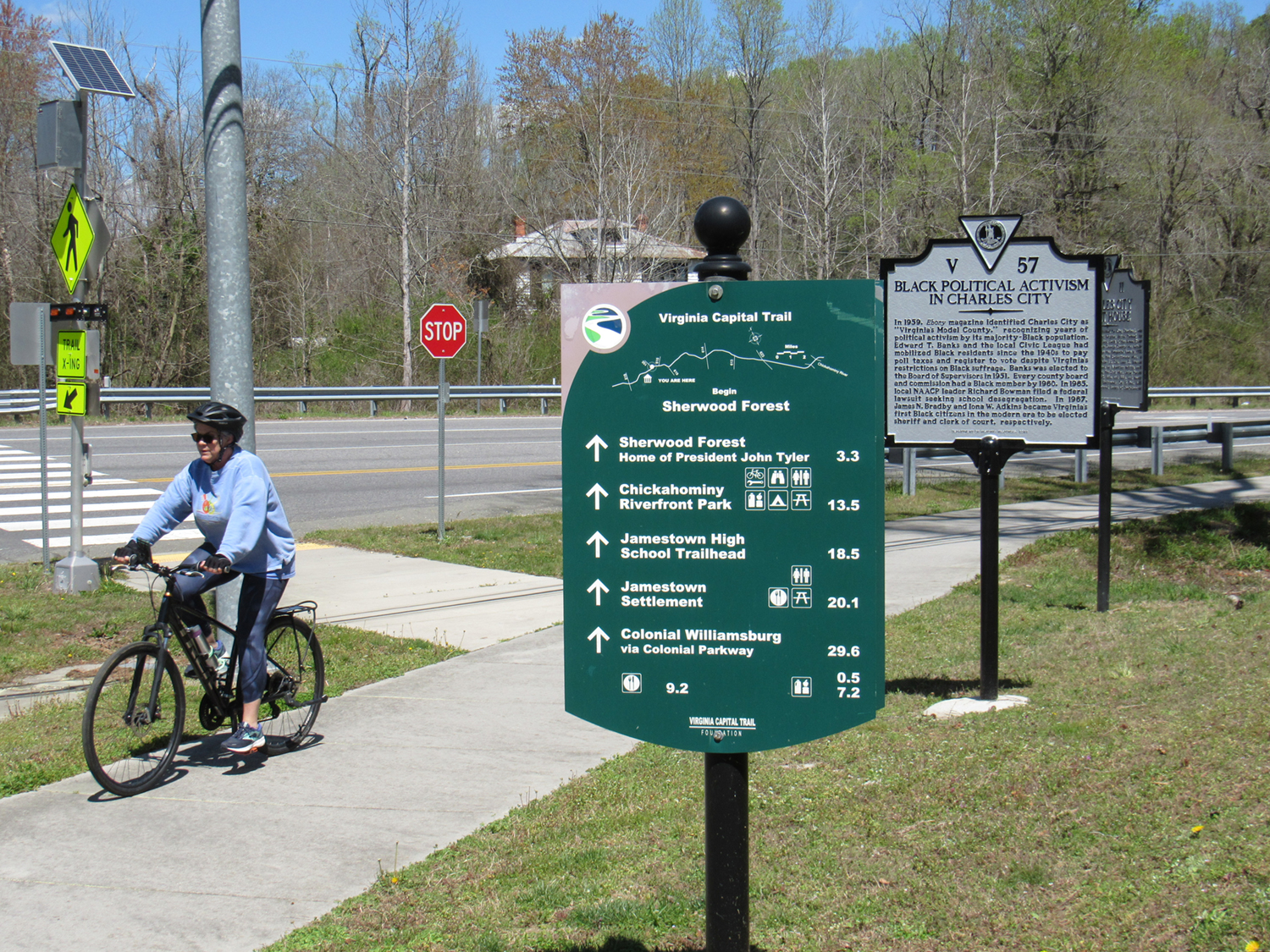
But success revealed a new set of questions. While the physical surface of the 50-mile trail was exceptionally well-maintained by Virginia Department of Transportation (VDOT), there was growing interest in more amenities beyond the 10-foot wide ribbon of asphalt. Trail users were looking for a robust trail experience — more benches, shade, and comfortable places to stop and rest. The popularity of the trail now required more trailheads and access points that could become destinations unto themselves as well as part of the fabric of the route. 

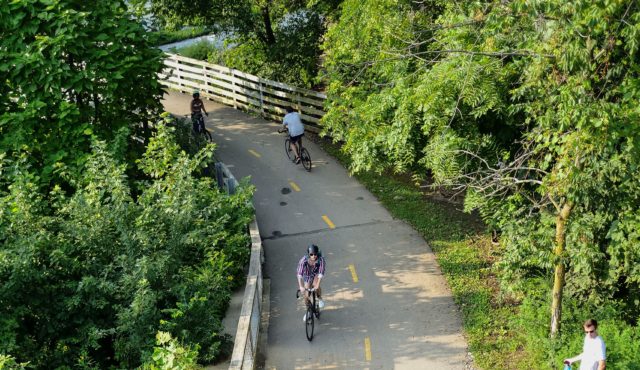
A section of the Virginia Capital Trail
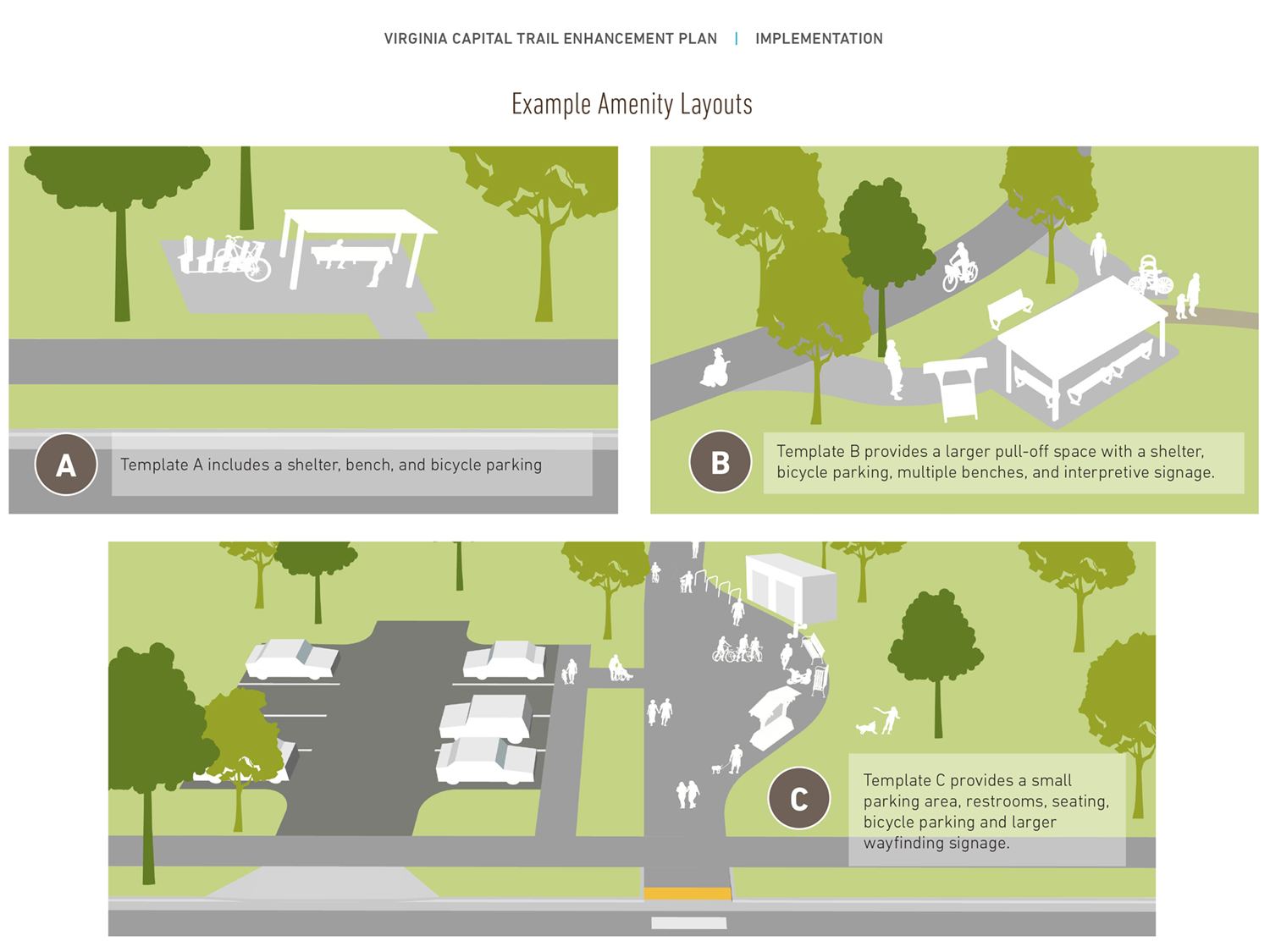
Templates for suggested amenity layouts along the trail

The Virginia Capital Trail Foundation recognized this gap and engaged Toole Design to develop an enhancement plan, to help VDOT and local municipalities take the fullest advantage of what the trail had to offer. We presented templates for what a trailhead or access point should include and a system for identifying stretches of trail where amenities were most needed. The goal, in part, was to help an agency that excels at infrastructure start to think about the human experience that infrastructure is meant to support.

Building a trail and curating a trail experience are two different responsibilities, requiring different partners and expertise. That lesson was foundational for what came next.

Fall Line Trail: Building connections across communities

By the time planning began on the Fall Line Trail, communities along the Virginia Capital Trail corridor had seen what trails could do. That allowed the conversation to shift from whether a trail was worth building to how communities could get involved earlier to integrate the regional trail into their local infrastructure and culture.

Sports Backers, a Richmond-based nonprofit, stepped into the role of regional trail champion, partnering with VDOT, securing impressive amounts of early funding, and hiring Toole Design to develop a Vision Plan that would bring jurisdictions together and ensure that placemaking and community experience were considered from the start.

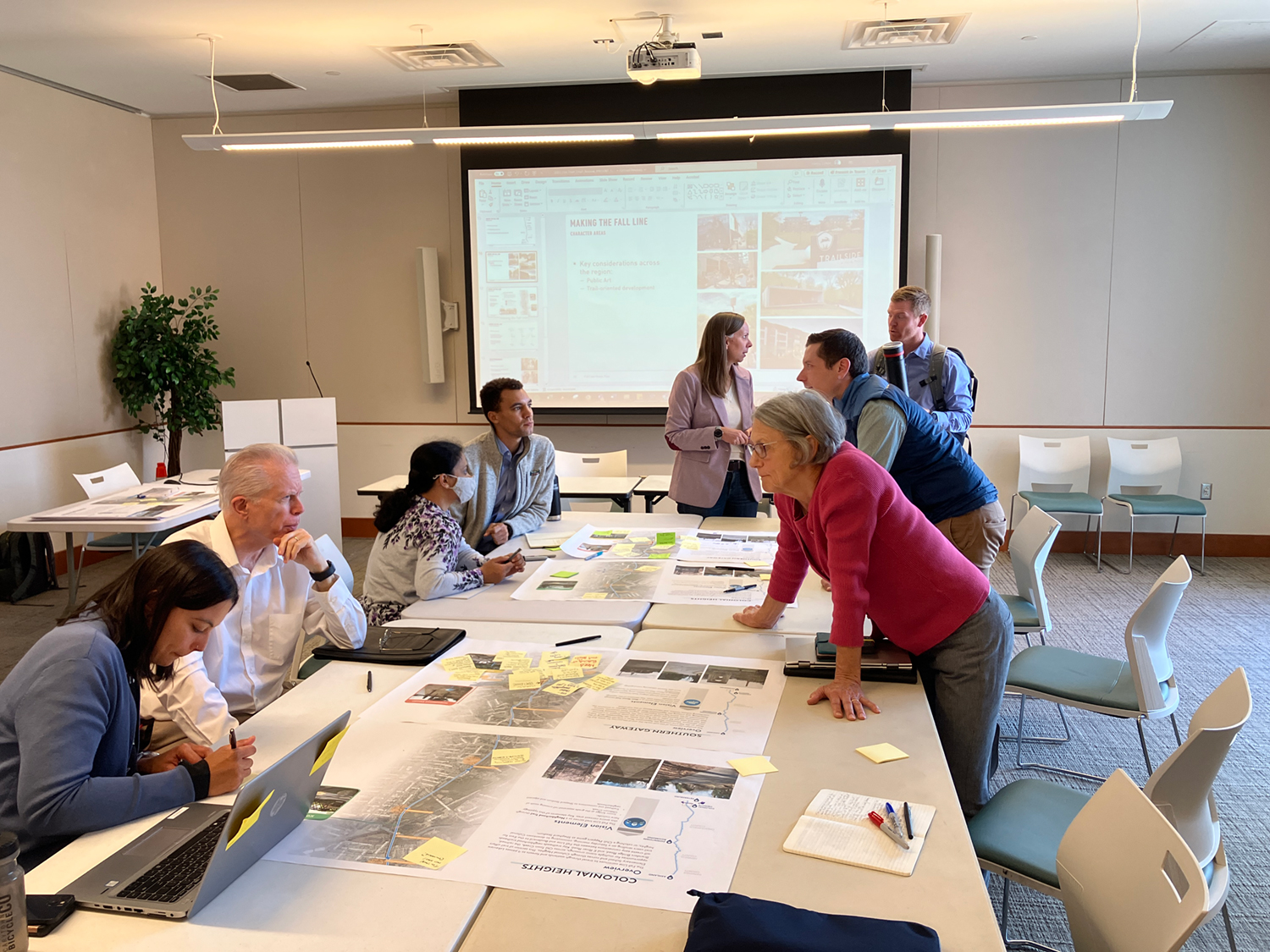
Vision plan review charrette with stakeholders
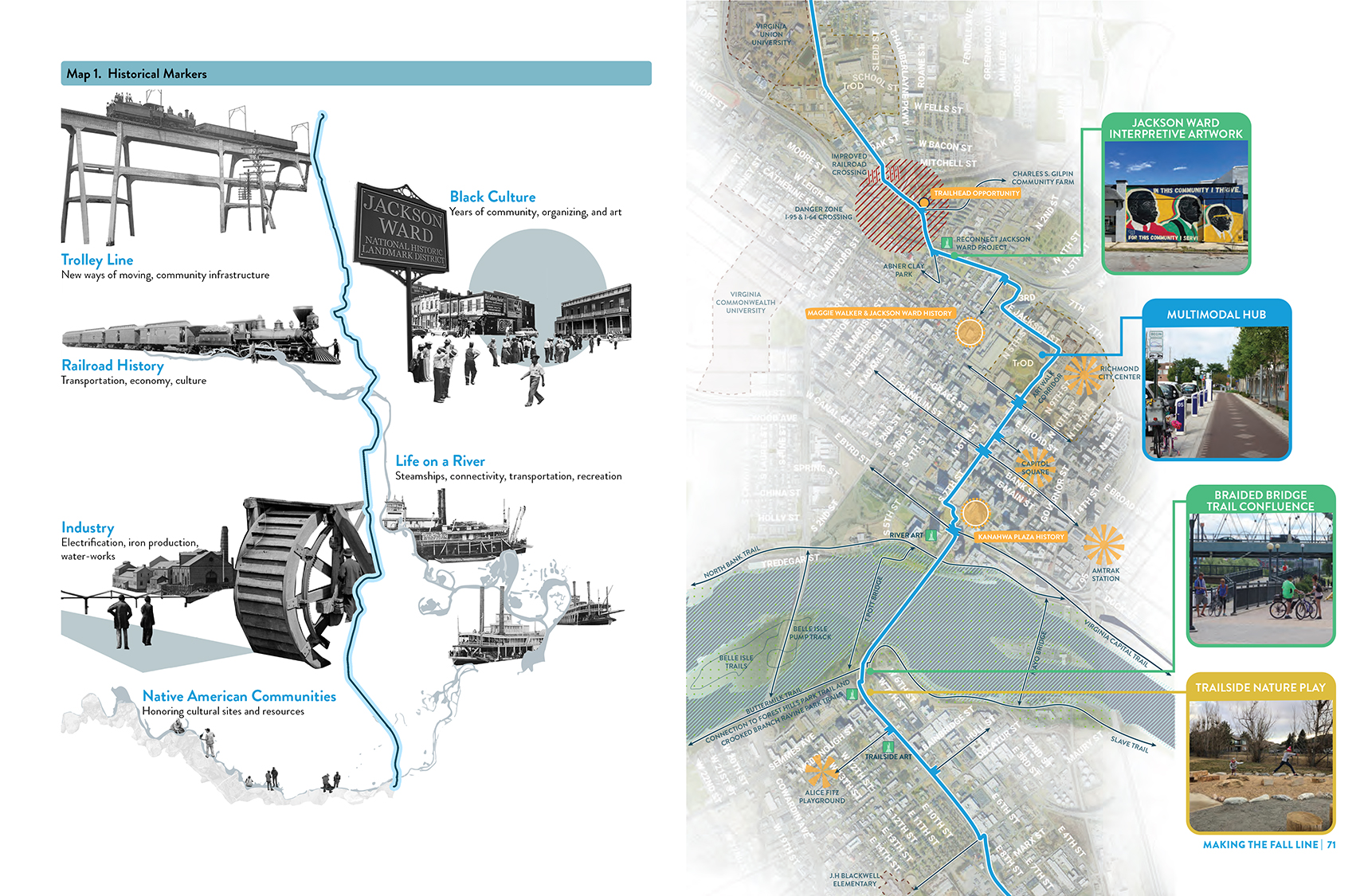
Character zone plan for a segment of the Fall Line Trail

The engagement process — six months of outreach across a 40-mile corridor stretching from Ashland to Petersburg — produced levels of enthusiasm and collaboration that surprised us all. At workshops along the route, representatives from jurisdictions at opposite ends of the trail began advocating for shared standards and design guidelines. Communities that had no particular reason to coordinate found themselves invested in each other’s decisions, listening to each other’s plans, and finding ways to align. The regional identity of the Fall Line Trail, something that could easily have remained abstract, started to feel real and shared.

What made that possible was treating storytelling, visuals, and placemaking not as finishing touches but as planning tools. Character zones, gateway elements, and a corridor-wide narrative gave each community a way to see itself in the trail while also seeing the trail as something larger than their own jurisdiction. The result was a regional cohesion that precious few projects ever achieve.

Three Notched Trail: Envisioning a statewide network

The Three Notched Trail, which will traverse more than 25 miles from Charlottesville to the Blue Ridge Tunnel, is the most complex of the three trail projects. Unlike the Virginia Capital Trail and the Fall Line Trail, it lacks a natural existing corridor for large parts of its length, and its right-of-way is constrained.

Crucially, the Three Notched Trail also has something the earlier corridors didn’t have at the same stage: a thriving regional trail culture, inspired by the vision of a statewide network that is now two steps closer to completion. With the potential to link to the Virginia Capital Trail to the east and planned trail improvements to the west, the Three Notched Trail can now be positioned as both a local amenity and a critical link in a system of trails from the Shenandoah Valley to Hampton Roads.

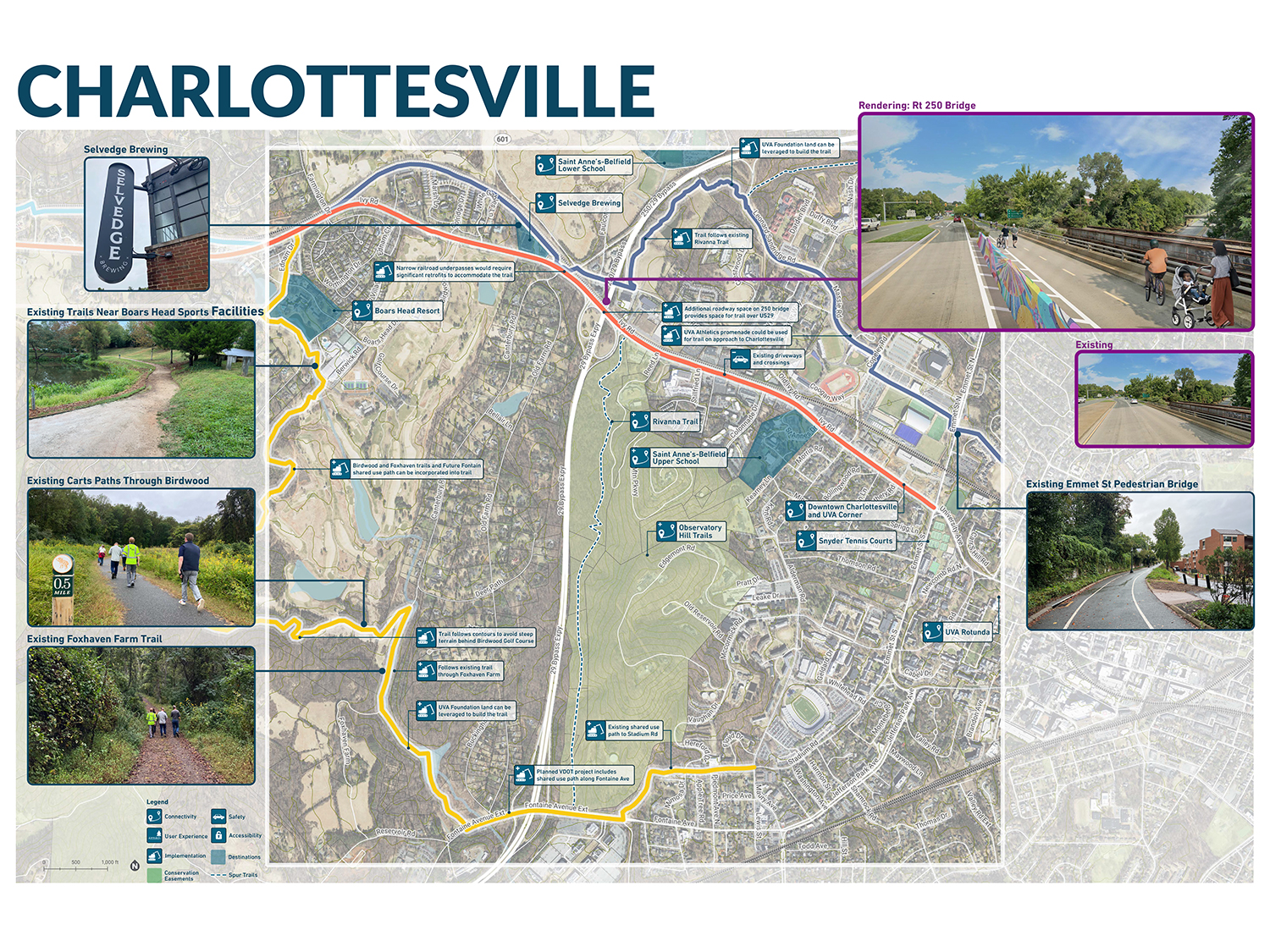
Map of existing conditions and trail route options in Charlottesville
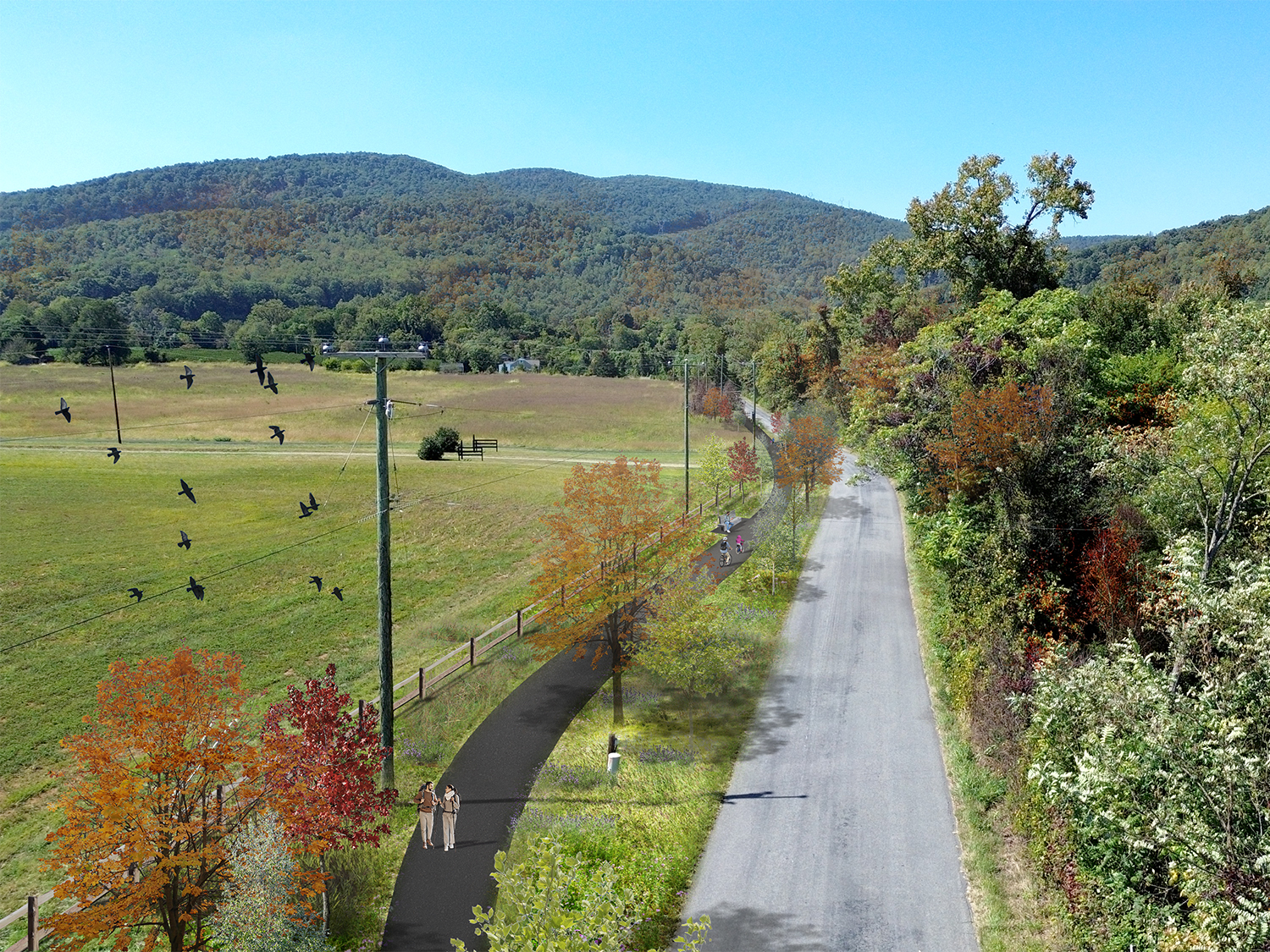
Rendering of potential trail alignment

Toole Design is conducting rigorous route evaluations, including trip potential and safety crossing assessments, while grounding our recommendations in public input. The preferred route that emerges will create the framework for project phasing, funding, and implementation. Every step of this process is made easier by the lessons around trail design, ownership, and maintenance that the other trails taught us.

The future of Virginia trails

The magic of a regional trail network is that it delivers value even to people who will never travel the whole thing end to end. Each segment connects to something larger. Each new trail makes the one before it more useful. That compounding effect — trails becoming more valuable as the network grows — is what Virginia is now positioned to realize.

The momentum continues to build, with the recent completion of the Statewide Multiuse Trails Plan, a framework for a connected system of multiuse trails across the Commonwealth, and the new Virginia State Trails Office Resource Hub.

These Virginia trail stories show how strong trail networks do more than connect destinations. They accumulate knowledge, build trust across jurisdictions, and grow more valuable with every mile added.

See All Articles Next Article